Skip to content

"Moroni's America" – The North American Setting for the Book of Mormon

The Book of Mormon in North America

Search
  • Home
  • Geography
    • Jonathan Neville on the Radio
    • Overview of Geography and Church History
    • The Mormons and the Mounds
    • Divine Documents
    • Cumorah’s Cave
    • Basic Questions
  • Research
    • Original Sources
    • New Research
    • Reviews of Old Research
      • BMAF
      • Book of Mormon Central
      • BYU Religious Studies Center
      • BYU Studies
      • Church History Library
      • FairMormon
      • FARMS
      • Joseph Smith Papers
      • Meridian Magazine
      • Neal A. Maxwell institute-BYU
      • The Interpreter
  • Testimony
  • Moroni’s America Blog
  • Neville Blogs
  • Fun Stuff
  • Maps
  • Store
  • Links
  • About
  • Videos

"Moroni's America" – The North American Setting for the Book of Mormon

The Book of Mormon in North America

Close menu
  • Home
  • Geography
    • Jonathan Neville on the Radio
    • Overview of Geography and Church History
    • The Mormons and the Mounds
    • Divine Documents
    • Cumorah’s Cave
    • Basic Questions
  • Research
    • Original Sources
    • New Research
    • Reviews of Old Research
      • BMAF
      • Book of Mormon Central
      • BYU Religious Studies Center
      • BYU Studies
      • Church History Library
      • FairMormon
      • FARMS
      • Joseph Smith Papers
      • Meridian Magazine
      • Neal A. Maxwell institute-BYU
      • The Interpreter
  • Testimony
  • Moroni’s America Blog
  • Neville Blogs
  • Fun Stuff
  • Maps
  • Store
  • Links
  • About
  • Videos

"Moroni's America" – The North American Setting for the Book of Mormon

The Book of Mormon in North America

Search Toggle menu

Author: Jonathan Neville

August 21, 2019Uncategorized

Omissions from Joseph Smith – History

Careful readers of Joseph Smith – History in the Pearl of Great Price notice that there are ellipses in some places, such as between verses 65-66, which you can see here:
https://www.churchofjesuschrist.org/study/scriptures/pgp/js-h/1?lang=eng

You can read the full history in the Joseph Smith Papers here:

https://www.josephsmithpapers.org/paper-summary/history-circa-june-1839-circa-1841-draft-2/11

In this post, I’m showing two of the omissions because it they are relevant to our understanding of the translation process. I wish it could be added back to Joseph Smith – History.

First, though, let’s consider two verses from JS-H.

62 By this timely aid was I enabled to reach the place of my destination in Pennsylvania; and immediately after my arrival there I commenced copying the characters off the plates. I copied a considerable number of them, and by means of the Urim and Thummim I translated some of them, which I did between the time I arrived at the house of my wife’s father, in the month of December, and the February following.

63 Sometime in this month of February, the aforementioned Mr. Martin Harris came to our place, got the characters which I had drawn off the plates, and started with them to the city of New York.

Here Joseph explains how he prepared for the translation. First, he copied characters off the plates, presumably onto paper. Then he translated “some of them” by means of the Urim and Thummim.

He did this from December through February, in the depths of winter, when there was presumably no farm work to do (other than chopping wood for fires).

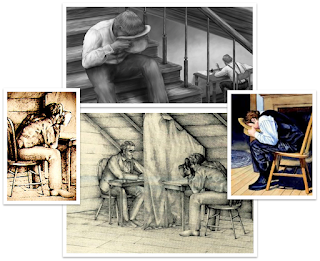
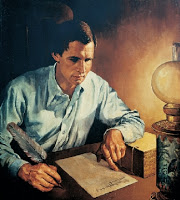
There are several artists’ depictions of this process. They don’t show the Urim and Thummim, but Joseph doesn’t say he needed the Urim and Thummim to copy the characters.

Although revisionist Church historians say Joseph didn’t use the plates, Joseph says he copied the characters “off the plates.” Because we don’t have the documents Joseph prepared, we can only speculate how he may have copied the characters (or drawn them off).

There’s a good discussion of the three extant character documents here:
https://www.josephsmithpapers.org/paper-summary/appendix-2-copies-of-book-of-mormon-characters-introduction/1

There are some details in there that I’ll discuss another time. The point here is that Joseph copied characters off the plates. Because Emma said she never saw the plates, he copied the characters either when she was not present (which seems unlikely in the dead of winter) or in a manner that prevented her from seeing the plates. Either way, her “Last Testimony” that Joseph made no attempt to conceal them and that they were covered with a cloth needs to be interpreted somehow to accommodate Joseph’s statement about copying the characters off the plates.

_____

Current Joseph Smith History in ordinary blue type, the omitted portion in purple, with my emphasis in bold.

65 “He then said to me, ‘Let me see that certificate.’ I accordingly took it out of my pocket and gave it to him, when he took it and tore it to pieces, saying that there was no such thing now as ministering of angels, and that if I would bring the plates to him he would translate them. I informed him that part of the plates were sealed, and that I was forbidden to bring them. He replied, ‘I cannot read a sealed book.’ I left him and went to Dr. Mitchell, who sanctioned what Professor Anthon had said respecting both the characters and the translation.”

· · · · · · ·

Mr Harris having returned from this tour he left me and went home to Palmyra, arranged his affairs, and returned again to my house about the twelfth of April, Eighteen hundred and twenty eight, and commenced writing for me while I translated from the plates, which we continued untill the fourteenth of June following, by which time he had written one hundred and sixteen <​pages​> of manuscript on foolscap paper.

[Note: At this point, the Joseph Smith Papers inserts note 34 that says this:

“Emma Smith later stated that she also served as a scribe for the translation of the Book of Mormon, as did her brother Reuben Hale. Their inscriptions were likely included in this earliest manuscript, along with Harris’s. (Joseph Smith III, “Last Testimony of Sister Emma,” Saints’ Herald, 1 Oct. 1879, 289–290.)”

In my view, this is additional evidence that Emma’s “Last Testimony” is unreliable.  In her “Last Testimony,” Emma says she wrote “day after day” while Joseph’s face was buried in his hat. But here, Joseph’s own history says he translated from the plates. Plus, Joseph specifies that Harris had written the 116 pages. Joseph never once said anything about Emma acting as scribe for the Book of Mormon, just as he never once said anything about using a seer stone in a hat.]


Some time after Mr Harris had began to write for me, he began to tease me to give him liberty to carry the writings home and shew them, and desired of me that I would enquire of the Lord through the Urim and Thummin if he might not do so. I did enquire, and the answer was that he must not. However he was not satisfied with this answer, and desired that I should enquire again. I did so, and the answer was as before. Still he could not be contented but insisted that I should enquire once more. after After much solicitation I again enquired of the Lord, and permission was granted him to have the writings on certain conditions, which were, that he shew them only to his brother. Preserved Harris, his own wife [Lucy Harris Harris], his father [Nathan Harris], and his mother [Rhoda Lapham Harris], and a Mrs [Mary (Polly) Harris] Cobb a sister to his wife. In accordance with this last answer I required of him that he should bind himself in a covenant to me in the most solemn manner that he would not do otherwise than had been directed. He did so. He bound himself as I required of him, took the writings and went his way.

Notwithstanding however the great restrictions which he had been laid under, and the solemnity of the covenant which he had made with me, he did shew them to others and by stratagem they got them away from him, and they never have been recovered nor obtained back again untill this day.

[Note: JSP note 36 here points out that Joseph wrote a preface to the first edition of the Book of Mormon that discussed the 116 pages. Joseph wrote, “some person or persons have stolen and kept from me, notwithstanding my utmost exertions to recover it again.” Exactly what those exertions were remains a mystery.]

In the mean time while Martin Harris was gone with the writings, I went to visit my father’s family at Manchester. I continued there for a short season and then returned to my place in Pensylvania. 

Immediately after my return home I was walking out a little distance, when Behold the former heavenly messenger appeared and handed to me the Urim and Thummin again (for it had been taken from me in consequence of my having wearied the Lord in asking for the privilege of letting Martin Harris take the writings which he lost by transgression) and I enquired of the Lord through them and obtained the folowing revelation.

[Note: Here we see that the Urim and Thummim was not a seer stone Joseph found in a well or somewhere else; it was the Urim and Thummim that Joseph obtained with the plates, as he and Oliver said all along. It was not a single seer stone, either; Joseph says he enquired of the Lord through them. If Joseph was using a seer stone instead of Urim and Thummim, aka the Nephite interpreters, it would not have mattered if the heavenly messenger had taken the Urim and Thummim.]

[D&C 3]

After I had obtained the above revelation, both the plates, and the Urim and Thummin were taken from me again, but in a few days they were returned to me. ​when I enquired of the Lord, and the Lord said thus unto me​ 

[Note: Here Joseph lost both the plates and the Urim and Thummim, but again, it wouldn’t have mattered if all he was doing was reading words that appeared on a stone in a hat.]

[D&C 9 inserted by James Mulholland]

I did not however go immediately to translating, but went to laboring with my hands upon a small farm which I had purchased of my wife’s father, in order to provide for my family. In the month of February, Eighteen hundred and twenty nine my father came to visit us at which time I received the following revelation for him.

[Note: According to Joseph Smith, Martin Harris wrote the 116 pages. Then Joseph lost the plates, and after he got them back, he did not start translating because he had to work on the farm. The next time Joseph mentions translating is when Oliver showed up in April 1829. Emma’s claim does not fit anywhere within Joseph’s narrative.]

[D&C 4]

The following I applied for at the request of the aforementioned Martin Harris and obtained.

[D&C 5]

66 On the 5th day of April, 1829, Oliver Cowdery came to my house, until which time I had never seen him. He stated to me that having been teaching school in the neighborhood where my father resided, and my father being one of those who sent to the school, he went to board for a season at his house, and while there the family related to him the circumstances of my having received the plates, and accordingly he had come to make inquiries of me.

67 Two days after the arrival of Mr. Cowdery (being the 7th of April) I commenced to translate the Book of Mormon, and he began to write for me.

The end.

Source: Letter VII

August 21, 2019Uncategorized

List of hoaxes you have to believe to accept M2C

To believe in M2C (the theory that there are two Cumorahs, with the “real” Cumorah of Mormon 6:6 in Mexoamerica and the “fake” Cumorah in New York), you have to believe several hoaxes.

To support M2C, Book of Mormon Central and other members of the M2C citation cartel continue to promote these hoaxes.

The best way to promote a hoax, of course, is by censoring important facts and alternative explanations. Not surprisingly, that’s exactly what Book of Mormon Central, the Interpreter, and other members of the M2C citation cartel do.

Here’s a partial list of the hoaxes our intellectuals say you have to believe in, because otherwise, M2C implodes.

1. Oliver Cowdery and David Whitmer were unreliable witnesses because they taught that the Cumorah of Mormon 6:6 was in New York.

2. Joseph Smith passively adopted the false tradition that the Hill Cumorah of Mormon 6:6 is in New York and thereby misled the Church.

3. It was Moroni who showed the plates to Mary Whitmer in Fayette. We know this because she was wrong when she said the messenger told her his name was Nephi, and David Whitmer was wrong when he said it was the same messenger who took the Harmony plates to Cumorah, a messenger Joseph wrongly identified as one of the Nephites.

4. Every Prophet/Apostle who has taught the New York Cumorah misled the Church, including members of the First Presidency speaking in General Conference.

5. Anonymous articles in the 1842 Times and Seasons that didn’t mention Cumorah nevertheless prove that Cumorah cannot be in New York.

6. Joseph Smith was an ignorant farm boy who couldn’t possibly translate the ancient Nephite plates, even with the gift and power of God, so he had to read words that appeared on a seer stone in a hat, put there by an “intermediary translator,” creating a “metaphysical teleprompter.”

7. The Book of Mormon events took place within a limited geography of Mesoamerica.

8. The Book of Mormon describes Mesoamerica, but Joseph didn’t know that so he (and/or the teleprompter) used terms that fit North America to describe Mesoamerican (Mayan) structures, animals, and culture.

9. Oliver Cowdery misled Brigham Young, Heber C. Kimball, Wilford Woodruff and others when he said he and Joseph entered the Nephite repository on multiple occasions. At most, Oliver was relating visions of a repository in the “real” hill Cumorah in an unknown location in southern Mexico.

10. The modern prophets have hired the intellectuals to guide the Church in all these matters, so criticizing the intellectuals constitutes criticism of the Brethren.

Source: About Central America

August 20, 2019Uncategorized

Nathan B. Oman on Intellectuals

On this blog we discuss intellectuals from time to time, so I was especially interested in an article by Nathan B. Oman that was published by the Interpreter.

Long-time readers know that I think the Interpreter, starting with the arrogance of its name, is a pretentious organization of self-appointed experts who promote M2C, revisionist Church history, etc. But that doesn’t prevent me from reading it occasionally because I value diversity of views (unlike the M2C citation cartel).

And sometimes we see an important article posted there, in this case by Nathan Oman, one of the reliably excellent authors.

Here’s the link:

https://journal.interpreterfoundation.org/welding-another-link-in-wonders-chain-the-task-of-latter-day-saint-intellectuals-in-the-churchs-third-century/#more-20918

I encourage everyone to read it. I agree with much of what Oman writes here, so I’ll just mention a couple of points that occurred to me when I read the paper.

1. Oman mentions the highly successful British Mission (1837-1841). Back then, the Twelve and other missionaries emphasized truth claims. The first issues of the Millennial Star published Oliver Cowdery’s eight letters, including Letter VII. While we live in different times, those truth claims endure (or should endure), yet many members of the Church are completely unaware of them. Certainly missionaries are unaware. Maybe the Missionary Department could experiment with making truth claims like those made during the British Mission.

2. Oman says that by 1901, “Convert baptisms had slowed to a trickle.” Note 13 says that there were 310,000 members, including 20,000 added during the year. That looks like nearly a 7% increase, which, if applied to today’s 16 million members, would mean over 1 million people added in the last year. It’s no secret that actual growth is far, far below that today. I wouldn’t characterize a 7% increase as a trickle.

These are minor points, so lets turn to the main point.
_____

This extract from the abstract establishes the main point well (emphasis added):

Abstract: This is a challenging moment for The Church of Jesus Christ of Latter- day Saints. Both its efforts at retention and missionary work are less effective than they have been in the past. At this moment, what is the most important task facing Latter-day Saint intellectuals? In contrast to those who argue that faithful thinkers and writers should focus either on defending the faith or providing criticisms of the Church’s failings, this essay argues that the Latter-day Saint clerisy should focus on celebrating the Restoration and finding new language in which to express what makes the Restored Gospel of Jesus Christ a compelling and attractive force in people’s lives. 

This is a tremendous insight. Celebrating the Restoration as “a compelling and attractive force in people’s lives” is an answer to the apathy and ennui we see among too many members today. Maybe new language would help, but I think a new focus would make a bigger difference.

Before I get to that, I’m not sure intellectuals are the right audience for Oman’s message. They should be, for sure. But in my experience, many of them are satisfied with their secure Church employment and their assumption that, because they’ve been hired by the Church, their views are correct, endorsed by the prophets, etc.

In today’s Church, we have prominent intellectuals who spend a lot of time (and money) (i) revising Church history to resurrect and adopt long-discredited theories (such as the stone-in-a-hat translation), (ii) promoting M2C (the Mesoamerican setting is an obvious hoax to the rest of the world and to more and more members), and (iii) debating arcane issues very few people care about.

If Oman’s message gets through to them, all the better.
_____

The new focus we’d like to see involves an aspect of Church history and doctrine that seems to have been overlooked for a long time. It’s what I call the Fifth Mission, or establishing Zion.

Some time ago I was going to publish a book titled “Zion Without Us,” but my publisher talked me out of it. The basic premise is that we Latter-day Saints have not lived up to the ideals set out in the scriptures and by the prophets regarding the establishment of Zion. We do okay, but by and large, as a people, we’ve squandered our spiritual inheritance and instead continue to value wealth and status over equality and fraternity.

I’ve written about this elsewhere, but we seem to ignore the scriptures that make us uncomfortable on this topic. For example, D&C 49:20 has not been quoted in General Conference since 1968, although earlier prophets and apostles did discuss it. Does that mean it is no longer binding or relevant?

People throughout the world are focused on the issues of equality and justice, including economic equality. The Restoration included solutions that, for the most part, we’ve abandoned. True, the self-reliance and assistance programs are awesome. There are Church members who live well below their means because they assist others. But throughout LDS culture, we see an emphasis on prosperity, big houses, expensive cars, status, popularity, and all the rest of what the world values.

When the prophets have discussed these topics in the past, the members have largely ignored them, so why should the prophets persist?

Because Oman’s article addresses the intellectuals, let’s consider how that is working out. We have a few Church employee intellectuals who, because of their ideological preferences, denigrate the different beliefs of Church members who faithfully pay their tithes and offerings, despite having living standards far below those of the Church employees whose salaries and expenses are paid by those contributions. There is an example of that attitude in the comments to Oman’s article, as there usually is in the Interpreter.

_____

Oman’s article is awesome in many ways, but I don’t think using new language is an adequate solution; after all, the King James Bible hasn’t changed much since 1611, and yet is retains relevance around the world (granting that newer translations are becoming more popular). The scriptures are continually renewed as each generation discovers them for itself.

In my view, we are so far from the ideals established in the Book of Mormon that D&C 84:55-57 seems to remain in effect.

Oman’s article is awesome for the attention it brings to this topic. If you haven’t read it yet, do it now.

https://journal.interpreterfoundation.org/welding-another-link-in-wonders-chain-the-task-of-latter-day-saint-intellectuals-in-the-churchs-third-century/#more-20918

Source: About Central America

August 19, 2019Uncategorized

Faith crises and Education Week

In a day when the Gospel Topics Essays, the Saints book, Book of Mormon Central, the Interpreter, and even the Ensign openly teach things that, in past generations, were taught only by critics and apostates (things that were specifically opposed by Church leaders at the time), it doesn’t seem surprising that the topic of “faith crisis” is on the minds of so many members of the Church.

Readers contact me all the time with questions about friends, family, and ward members who have left, usually over credibility issues; i.e., they can no longer believe the basic truth claims because LDS intellectuals have promoted such hoaxes as M2C, the peep stone-in-a-hat, and the unreliability of the teachings of the prophets.

The specific example I discussed in a recent series on this blog involves the peep stone vs. the Urim and Thummim. This week, this and other revisionist Church history ideas will be featured prominently at Education Week.

stone-in-a-hat hoax

I estimate that about a week from now, tens of thousands more Latter-day Saints will leave Provo believing that Joseph Smith translated the Book of Mormon by reading words that appeared on a peep stone in a hat, while the plates sat nearby, useless and covered with a cloth.

Of course, this means that Joseph and Oliver misled the Church when they consistently and persistently said Joseph translated the Book of Mormon by using the Urim and Thummim that came with the plates.

But according to Book of Mormon Central and other M2C intellectuals and revisionist Church historians, Joseph and Oliver misled the Church about lots of things.
_____

This example surfaced in comments to a review by Jana Riess of the book Bridges: Ministering to Those Who Question by David B. Ostler.

https://religionnews.com/2019/08/09/every-mormon-leader-and-teacher-and-parent-should-read-this-book/

Riess observes these statistics.

In the absence of information, leaders sometimes “jump to conclusions because they need to explain it and understand it.” These include the ideas that people are lazy, they are sinful, or they got offended.

Ostler decided to test those ideas on two different populations. In addition to the Faith Crisis Member Survey mentioned above, he also conducted a parallel “Local Leader Survey” in which he asked bishops, Relief Society presidents, and other leaders why they think people leave.

The disconnect was startling. For example, 84% of local leaders said that people leave because they don’t want to live the commandments, but only 9% of Faith Crisis respondents said that actually applied to them.

Instead, they said they were concerned about problems in Church history, the Church’s stance on LGBT issues, unequal gender roles, judgmentalism, and other issues.

The topics of LGBT, gender roles, and judgmentalism are outside the scope of this blog, but many of the concerns about problems in Church history are unforced errors that past prophets and apostles addressed repeatedly in the clearest words.

But today’s M2C intellectuals and revisionist Church historians have erected barriers to faith that are very difficult for many people to overcome.

These intellectuals seem to enjoy the complexity of remaining faithful in the face of all these supposedly perplexing issues they raise. But really, the explanations given by Joseph and Oliver are simple, straightforward, and, by virtue of their callings, prophetic.

Rather than accept what the prophets have taught, our intellectuals send people down the rabbit holes of Mesoamerica, two Cumorahs, the peep stone-in-a-hat, and so much more.

_____

The comments to Riess’ article include the following exchange. The comments from Danny are typical of many of those who have left the Church or have declined further meetings with the missionaries.

What else are people such as Danny supposed to conclude once they read the hoaxes perpetuated by modern intellectuals?

Howard Kay • 5 days ago
I think there are a few aspects of this situation that Dr. Riess’ article touched on, but did not emphasize. (? Perhaps the book did not get into these?)

That’s the idea of “how did these bishops (et al) ‘know’ why these Mormons left? What was the source of their “knowledge”?

It would appear that in fact they had no real knowledge of the reasons these individuals left. Rather, they appear to have made up reasons that would be satisfying to the LDS authorities.

The first obvious question that raises is, “why?” My guess is that the “answers” were very satisfying to all concerned, and reinforced their ideas about LDS beliefs and culture.

And I think this situation raises another interesting question: is there any in-depth curiosity among LDS authorities about these matters? My guess is that they learn quickly that curiosity is not a good characteristic!

worried American citizen  Howard Kay • 5 days ago
Or, perhaps those who left did not provide the “real” reason they left. Bishops are aware of many situations, but not al, and have no way to determine if anything they are told is the true and real issue, versus a distraction from or scapegoat for the true and real issue.

Danny  worried American citizen • 4 days ago
Your response presumes there is an inquiry by the bishop into a person’s reasons for leaving. My experience, and plenty of others anecdotally, is neither most bishops nor most members want anything to do with that conversation. After tireless and faithful service of 50 years, my wife and I resigned. Except for a brief visit from a leader, crickets for years after. We’ve remained cordial to those we bump into once in a while. All those people who used to come up to us and tell us how much they loved us on Sunday? Not so much.

It seems that cognitive dissonance is mistaken for a “loss of the Spirit”, rather than for what it really is–two mutually incompatible ideas vying for the same space. Just one example of many: Claim: Joseph translated the gold plates using the Urim and Thummim. Dissonance: No, Joseph used a seerstone he placed in a hat. The same seerstone he used when convicted of being an unruly person (bilking neighbors through treasure-seeking). More dissonance: Wait, we weren’t taught about a seerstone in a hat in church. Why don’t ANY of the church illustrations use in ANY programs show him with his face buried in his hat? And, if he was able to use the seerstone, then why did God make Moroni lug his abridgment around to hide it from the Lamanites?

Source: About Central America

August 14, 2019Uncategorized

How can we work together?

By now, readers here know that I support 80-90% of what Book of Mormon Central does because I share their stated objective of making the Book of Mormon more accessible to the world.

It is that objective that leads me not to support 10-20% of what they do because they continue to promote M2C as the only acceptable explanation for the historicity and geography of the Book of Mormon.

I think M2C is a mistake for many reasons, but I also don’t think everyone who believes the Book of Mormon has to agree about the geography and historicity issues. I’m fine with people believing whatever they want, so long as it works for them. But I’m not fine with people, especially self-appointed intellectuals, telling everyone else what they have to believe and censoring alternative ideas.

In my view, the only effective approach, given current conditions, is the one the Church has adopted: neutrality.

However, Book of Mormon Central, its management, donors, and employees, are anything but neutral about geography and historicity. I don’t have any reason to think that will change anytime soon. However, a course correction is always possible.

I understand that M2C is important to the M2C intellectuals and their followers. So I’m wondering, how can everyone work together to advance the cause of the Book of Mormon, despite differences of opinion about how to interpret and apply the text to issues of historicity and geography?

IOW, how can everyone work together?
_____

It seems obvious that the ideal solution would be to recognize and respect other opinions by offering comparisons and explanations so everyone can make informed decisions for themselves.

I’m not only willing to do that: I’ve provided such comparisons. I link to the explanations provided by those who promote M2C and other theories.

I think full and open disclosure is the best way to go.

But Book of Mormon Central and the rest of the M2C citation cartel disagree. They believe only they are qualified to interpret the scriptures (hence, Dan P.’s Interpreter), and they don’t even want members of the Church to know about alternatives.

If anyone has any ideas about how to get the various groups to work together, email them to me and I’ll discuss them on this blog.
_____

The Apostles were persecuted, and with one exception perhaps, were finally martyred. And the churches they established never came to that union which the Savior prayed for, and consequently they failed to stand the tide of opposition. 

The Latter-day Saints are trying to do the work that Israel failed to do; and that the former Saints did not accomplish, and we can only do it by becoming one even as the Father and the Son are one, and this in order that the world may believe that we are sent of God. We have got to be perfect, and come to the measure of the stature of Christ Jesus, in order that the world may know that Jesus has sent and commissioned His Apostles, and restored the holy Priesthood. 

If we have division in our midst; if we be divided either spiritually or temporally, we never can be the people that God designs us to become, nor can we ever become instruments in His hands of making the world believe that the holy Priesthood has been restored, and that we have the everlasting Gospel. In order for us to effect the purposes of God, we shall have to do as Jesus did—conform our individual will to the will of God, not only in one thing, but in all things, and to live so that the will of God shall be in us.

(1880s1882, LS Lord in teres ¶7 • JD 23:341)

THE LORD INTERESTED IN THE SALVATION OF THE WHOLE HUMAN FAMILY—HIS PLANS, PURPOSES AND DEALINGS ALL TO THAT END—NECESSITY OF CHARITY, LOVE, UNION, ETC., IN THE CHURCH OF CHRIST—THE LOGAN TEMPLE AND A PROPHETIC GLIMPSE AT ITS FUTURE.
Discourse by Apostle Lorenzo Snow, delivered at Logan, on Saturday Afternoon, Nov. 4, 1882.

Source: About Central America

August 13, 2019Uncategorized

Alternative interpretations and M2C

Most LDS scholars are thoughtful, open-minded, and eager to improve their work as they learn new things and interact with others. However, there are a handful of LDS scholars who are intransigent, closed-minded, and defensive on particular topics. The most prominent are those who promote M2C.*

Long-time readers here know that my principal objection to the M2C theory is the way the M2C citation cartel refuses to acknowledge alternative interpretations. Their advocacy of M2C has led them to censor information that contradicts M2C, repudiate the teachings of the prophets, and castigate those who hold different views.

It’s very strange that our most prominent LDS scholars pursue this approach.

The course pursued by the M2C citation cartel is anti-academic. It contradicts the Church’s policy of neutrality and it poses a serious obstacle for acceptance of the Book of Mormon.

According to the M2C intellectuals, the Book of Mormon can only have taken place in Mesoamerica. From this hypothesis, which they teach is a fact, they reason that the Hill Cumorah of Mormon 6:6 cannot be in New York. Then they use this rationale to repudiate the teachings of the prophets about the New York Cumorah. In recent years, they’ve even developed “abstract” maps based on the M2C interpretation to imprint M2C on the minds of students throughout the Church.

The M2C approach cannot, in my view, lead to truth. Instead, it leads to circular reasoning, bias confirmation, and increasingly unbelievable outcomes. Plus, it taints other areas of study, such as Church history. M2C led to the censorship of Cumorah in Volume 1 of Saints, for example.

I favor instead an approach based on multiple working hypotheses. You can google it to find examples. Here’s one: https://www.thoughtco.com/geological-thinking-1440872

This is a good statement of the concept:

Scientific study designed to increase our knowledge of natural phenomena can follow at least three different intellectual methods. These can be called the method of the ruling theory, the method of the working hypothesis, and the method of multiple working hypotheses. The first two are the most popular but they can, and often do, lead to ineffective research that overlooks relevant data. 

Instead, the method of multiple working hypotheses offers a more effective way of organizing one’s research.

M2C is based on the method of the ruling theory. That’s why organizations such as Book of Mormon Central refuse to offer readers comparisons between M2C and alternative theories. That’s why Book of Mormon Central censors information that contradicts M2C. And that’s why employees of Book of Mormon Central prowl the Internet to attack those who offer alternative working hypotheses.

Readers of this blog know that I’ve provided many such comparisons because I favor the method of multiple working hypotheses.

I encourage people to read what the material produced by the M2C citation cartel because I think most people prefer to make informed decisions instead of merely accepting what self-appointed experts tell them to think.

Or, as President Nelson explained in the April 2018 General Conference, “I know that good inspiration is based upon good information.“

The M2C citation cartel instead seems to think good inspiration is based upon censorship, contention, and repudiation of the teachings of the prophets. 

I continue to hope that more reasonable LDS scholars (as well as non-scholars) will work with the M2C intellectuals to promote more openness so that members of the Church, and people everywhere in the world who seek to know more about the restored Gospel, will have access to good information instead of the current system of censorship and contention fostered by Book of Mormon Central and the rest of the M2C citation cartel.
_____

*M2C is the acronym for Mesoamerican/two-Cumorahs theory which claims that the “hill in New York” is not the Cumorah of Mormon 6:6. M2C intellectuals teach that Joseph Smith, Oliver Cowdery and other Church leaders adopted a false tradition about the New York Cumorah because the “real Cumorah” is somewhere in southern Mexico. The M2C citation cartel is a group of M2C intellectuals who control major LDS academic publications and research organizations, including BYU Studies, the Interpreter Foundation, Meridian Magazine, Book of Mormon Central and FairMormon.

Source: About Central America

August 12, 2019Uncategorized

Teaching kids about peep stones

It’s one thing for Education Week to promote the peep stone-in-a-hat version of Church history at the expense of teaching what Joseph and Oliver consistently taught, as I discussed last week here.

(Joseph and Oliver always said Joseph translated the engravings on the plates with the Urim and Thummim that Joseph obtained with the plates. Their adversaries said he merely read words off a stone in a hat.)

Presumably, attendees at Education Week can think for themselves. They can recognize that the revisionist Church historians are merely reviving a long-discredited theory promoted by enemies of the Church in 1834 and beyond.

But it’s a different story when it comes to kids and youth in the Church.

I came across the following article recently, and while I really like and respect the author (who I’m not naming here), I find the suggestion astonishing.

I don’t see how anyone thinks that teaching the peep stone-in-a-hat narrative makes more sense, is more historically accurate, or is more believable than what Joseph and Oliver consistently taught. 

See what you think.

Parents can teach their children whatever they want, of course. We see that in every culture in every part of the world. It seems to me, though, that the less plausible the teaching, the less likely the kids are going to believe it once they grow up.

I edited this to remove any names. Please don’t google it to find the original article. Consider it as a hypothetical, and compare it to what you would teach your children, grandchildren, friends, students, etc.

Unfortunately, if you’re not going to teach what Joseph Smith and Oliver Cowdery taught, the following conversation is about the only way you can explain what we’re seeing in art, videos, and visitors centers today, thanks to the work of the revisionist Church historians.

Notice that the parents in this example never once told their kids what Joseph and Oliver said about the translation. I’m quite curious how the rising generation is going to handle the peep stone-in-a-hat narrative. Going back to the 1834 book Mormonism Unvailed, the peep stone-in-a-hat narrative has been pretty effective at persuading people to reject what Joseph and Oliver taught.

I suspect that success will continue with today’s generations.
_____

After church, I was enjoying dinner with my wife and our two children. As is typical around many dinner tables, we asked our kids, “What did you learn at church today?”

Our children’s response to that question sparked an important, unplanned teaching moment about Joseph Smith, who restored The Church of Jesus Christ of Latter-day Saints, and the translation of the Book of Mormon.

I’m hopeful that, because we taught our children at a young age the process God used with Joseph Smith to translate the Book of Mormon, our children will know Joseph Smith to be a prophet of God and the Book of Mormon the word of God.

IOW, they taught their kids that what Joseph and Oliver consistently taught was untrue.

Parents: What did you learn at church today?

Kids: We learned that the Book of Mormon was translated by the gift and power of God.

Parents: Do you know what that means?

Kids: No.

Parents: Let’s explain it. First, a question. (We put a Hebrew Bible in front of the kids.) How would you translate this book?

Kids: We’d have to study and learn the foreign language, open the book, get a dictionary and translate the words into English.

Parents: Right. Mom and Dad have both studied several languages. It was a lot of work. It took years sometimes to learn languages. After a lot of work and effort, we can translate from foreign languages into English, with the help of dictionaries. Next question. (We covered the Hebrew Bible with a cloth.) Do you think Dad can translate the Hebrew Bible?

Kids: Yes, if he took the cloth off the book and opened it.

Parents: What if Dad left the cloth on the book. Could Dad translate it?

Kids: No, because he wouldn’t see what was inside the book!

Parents: What if God helped Dad see what was inside the book without opening the book? Could God do that?

Kids: Yes.

Parents: But is that how Dad or other scholars typically translate books? By covering them with a cloth and asking God to reveal the content inside?

Kids: No.

Parents: Exactly. But this is how Joseph Smith translated. The Book of Mormon plates were typically covered with a cloth.

At this point, most people, including kids, are wondering why Joseph had to have the plates in the first place. Or even why Mormon and Moroni went to all the trouble of engraving the plates. Or why D&C 10 tells Joseph he has to translate the engravings. Or why Joseph and Oliver always said Joseph translated the plates using the Urim and Thummim that accompanied the plates.

Kids: So God helped him to know what was inside the book?

Parents: Yes. Now, was Joseph Smith a scholar? Did he know lots of foreign languages?

Kids: No.

Parents: So how did Joseph Smith translate the Book of Mormon if he didn’t know or understand the language it was written in?

The kids might have read Joseph Smith – History 1:62, in which Joseph says he copied characters off the plates and translated some of them with the Urim and Thummim in December 1827-February 1828. This was before he dictated anything to Martin Harris. 

In the part of the history omitted from JS-H, Joseph stated that Martin “returned again to my house about the twelfth of April, Eighteen hundred and twenty eight, and commenced writing for me while I translated from the plates.”

In words as plain as can be, Joseph declared he could translate the characters and that he translated “from the plates.” He never once said he read words that appeared on a seer stone that he found in a well, but this is what our revisionist scholars are teaching.  

Kids: God helped him?

Parents: Right, but how?

Kids: We don’t know.

Parents: Remember when you said “by the gift and power of God”? We’ll explain it. God gave Joseph Smith a special stone called the seer stone as well as two other special stones called the Urim and Thummim. These stones would shine with light, showing the words of the Book of Mormon in English. Urim and Thummim mean “light and truth” in Hebrew, a perfect name for stones that shine words of light and truth. 

This is the tactic of confusing people by merging terms, as we’ve discussed before. In 1834, there was a sharp and clear distinction between the seer stone in a well, called a peep stone, and the Urim and Thummim that accompanied the plates. Modern revisionist historians have called both items the same name, but they have zero quotations from Joseph Smith to the effect that he merely read words that appeared on a stone in a hat.

If you were trying to read words of light, what would you do?

Kids: Maybe cover my head with a towel to block out the light so I could see the lighted words more easily.

Parents: OK. Back in Joseph Smith’s day, most people wore hats.

Kids: I could put the stone into a hat to more easily see the words of light. We do the same thing when we are trying to look at pictures on your smartphone outside in the sunlight. We try to create darkness around the phone with our hands or baseball cap so that we can see the picture.

Parents: Exactly.

We then showed them an artistic rendition of Joseph Smith preparing to translate, created by Anthony Sweat, a Brigham Young University Church History and Doctrine professor and juried artist.

Parents: This picture shows how Joseph Smith brought forth the words of the Book of Mormon (we typically call it “translation”). Now, is this how Dad translates the Hebrew Bible? Is this how scholars ever translate? Is this how you’ll be taught to translate when you learn a foreign language?

Kids: (Laughing) No!

Parents: So why did Joseph Smith translate that way?

Kids: (Thinking) Because Joseph Smith couldn’t translate in the normal way, and God wanted to prove that he made the Book of Mormon translation happen.

Parents: Good. Now another question. How hard would it be to translate a book from a foreign language that you didn’t know, and all you had to do was to read the words that appeared in English on a stone?

Kids: Not too hard.

Parents: That is essentially what God had Joseph Smith do, read words of light in English from the seer stone. But it was a lot of work spiritually for Joseph. He had to exercise righteousness and faith and trust in God. There was spiritual work and effort involved in the translation. God did a marvelous work and wonder to help Joseph Smith, who brought forth the Book of Mormon by reading words of light from specially prepared stones.

Parents: We know people who, when they learn that Joseph Smith was looking at a stone in a hat to translate, they don’t believe it. They say things like, “That’s a silly way to translate. If that is what Joseph Smith did, I’m not going to believe that he is a prophet or that the Book of Mormon is the Word of God.” 

Look at this rhetorical trick. Throughout the Church, youth are being taught that the peep stone-in-a-hat story is the truth, as opposed to what Joseph and Oliver consistently taught.

Some of these people even stop believing in Jesus and Heavenly Father because of this. Remember when Nephi built his boat to go to the Promised Land?

Kids: Yes.

Parents: Did Nephi make his boat to impress ship builders or to make his brothers proud or to prove how amazing he was at making a boat?

Kids: No.

Parents: Right. Nephi made the boat according to the designs God gave him. Nephi said “but I did build (the boat) after the manner which the Lord had shown unto me; wherefore, it was not after the manner of men” (1 Nephi 18:2). God wanted Nephi and his family to rely on and trust in him. So, too, with the Book of Mormon translation. The translation was not done “after the manner of men” in the format of translation that we all understand and expect. Instead, God used his own approach because he wants us to show faith in him.

Just as God miraculously brought forth his people out of Egypt with signs and miracles, so too God brought forth his ancient word in these days through miraculous means. God will do his work, not after the manner of men, and it will be marvelous in the eyes of his people.
_____

Source: About Central America

August 12, 2019Uncategorized

Why facts don’t change our minds

For those who wonder why M2C continues to be taught, consider these two sentences:

We don’t always believe things because they are correct. Sometimes we believe things because they make us look good to the people we care about.
There are few more obvious examples than M2C. Employees at Book of Mormon Central, for example, are unusually concerned with what their bosses and mentors think. 
The two lines in that quotation come from a wonderful essay that explains a fascinating aspect of human nature: People like to think their opinions are based on facts, but that is not the case.
The essay is found here:
https://jamesclear.com/why-facts-dont-change-minds
Here are two fun quotations from the essay:
The economist J.K. Galbraith once wrote, “Faced with a choice between changing one’s mind and proving there is no need to do so, almost everyone gets busy with the proof.”
Leo Tolstoy was even bolder: “The most difficult subjects can be explained to the most slow-witted man if he has not formed any idea of them already; but the simplest thing cannot be made clear to the most intelligent man if he is firmly persuaded that he knows already, without a shadow of doubt, what is laid before him.”

Source: Book of Mormon Concensus

August 9, 2019Uncategorized

FairMormon conference report

Yesterday I attended the FairMormon annual conference in Provo, Utah. It cost me $50 to see 7 presentations.

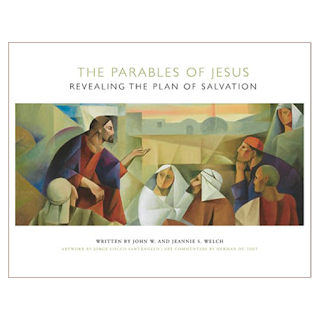
The first was excellent. John W. Welch and his wife Jeannie gave a presentation on their impressive book titled The Parables of Jesus: Revealing the Plan of Salvation. It contains wonderful illustrations by  Jorge Cocco Santangelo.

If you’re familiar with the parables, you’ll enjoy their thoughtful and even innovative observations. I highly recommend this book.

During his presentation, Brother Welch discussed the many ways that these parables can be interpreted. They have been interpreted artistically, theologically, linguistically, and any other way you can think of.

There is a tremendous irony here that did not seem to occur to Brother Welch, but was obvious to his audience (at least to me).

While he recognizes there are lots of ways to interpret the parables, Brother Welch insists there is only one way to interpret the Book of Mormon!

He is a major proponent of M2C. Actually, he is currently the single most influential proponent of M2C. He alone is responsible for the censorship at Book of Mormon Central of any interpretation of the Book of Mormon that contradicts M2C.

Brother Welch has been advocating M2C for decades. He has enforced M2C at FARMS, BYU Studies, and Book of Mormon Central.

He refuses to allow Book of Mormon Central to even show a comparison of M2C with other interpretations of the text, especially any interpretation that would support the teachings of the prophets about the New York Cumorah.

Brother Welch is a wonderful scholar and educator. He’s a great person, a faithful member of the Church, etc. But he has this obsession with M2C that continues to puzzle me. I think M2C is undermining his legacy and reputation, and it’s all so unnecessary and even tragic.
_____

The other presentations yesterday were fine. Nothing notable, except two funny incidents during the Q&A.

One speaker discussed the Eight Witnesses. During Q&A, someone asked what he thought about the two sets of plates (referring to the Harmony and Fayette plates). He said he was unfamiliar with that idea (naturally, because he only reads M2C material).

But Scott Gordon, the President of FairMormon who knows about the two sets of plates because he was in a presentation I gave about that history, leaned into the microphone and said, roughly, “That would make things more complicated.” The audience laughed.

Readers here know how the two sets of plates makes things more complicated for M2C advocates. If the Hill Cumorah really is in New York, their whole theory collapses.

Afterward, I gave the speaker a copy of Whatever Happened to the Golden Plates? Whether he reads it or not is another question, of course, and I suspect that if anyone from FairMormon saw he had a copy, they would tell him not to read it, the same way an Evangelical would tell someone not to read the Book of Mormon. M2C cannot survive without censorship.

The second funny incident was during another Q&A. The speaker was asked what he thought about the Heartland movement. I’m told he replied, “They’re a bunch of crazy fundamentalists.”

That comment says it all. Now, if you still believe what the prophets have taught, you’re ridiculed by the FairMormon intellectuals as a “fundamentalist.”

That pretty well sums up the M2C citation cartel.
_____

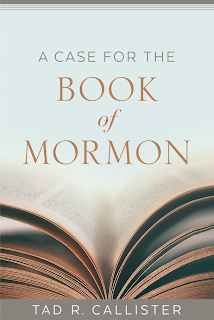
Today one of the speakers is Tad Callister, who will discuss his latest book, A Case for the Book of Mormon. I posted a review of that book here:

https://bookofmormonwars.blogspot.com/2019/08/review-of-case-for-book-of-mormon.html

It’s a brilliant piece of marketing. Brother Callister quoted extensively from the M2C citation cartel and praised their work. In return, Book of Mormon Central heavily promotes his book. They posted positive reviews on the Deseret Book web page, etc. It turns out that Brother Callister is donating the proceeds from the book to Book of Mormon Central.

Everyone who buys a copy of the book is contributing to the dissemination of M2C around the world.

We have to admire their audacity.

_____

I’ll discuss a few more aspects of FairMormon later.

Source: About Central America

August 9, 2019Uncategorized

Review of A Case for the Book of Mormon

People are asking me what I think of Tad R. Callister’s book A Case for the Book of Mormon.

Overall, it’s probably effective for bias confirmation; i.e., if you’re a follower of the M2C citation cartel, you’ll be happy to see your biases confirmed. There are plenty of citations of the usual suspects, all members of the M2C citation cartel.

However, if you still believe the teachings of the prophets, you might find parts of the book troublesome. And if you are a nonmember, a questioning member, or a youth seeking for answers, you will likely come away hoping that there is a much stronger case for the Book of Mormon than what is offered in this book.

For a positive review, read anything from Book of Mormon Central. Brother Callister is donating the proceeds of the book to Book of Mormon Central, so naturally, Book of Mormon Central and its employees are promoting the book as much as they can. He’s a featured speaker at the FairMormon conference as well.

If you buy this book, you are helping to promote and promulgate M2C.
_____

Here’s an example of a positive review:

http://associationmormonletters.org/blog/reviews/current-reviews/callister-a-case-for-the-book-of-mormon-reviewed-by-trevor-holyoak/
My take is a little different.
The book makes a good opening statement for a case for the Book of Mormon, but because it relies so much on material from FairMormon, Book of Mormon Central and the rest of the M2C citation cartel, it is ultimately not all that helpful for people who seek answers to questions posed by knowledgeable critics.

Here, I’ll give just two examples of the issues I noted.
_____

At one point, Callister writes:
To suggest that Joseph Smith dictated more than five hundred pages of history and doctrine with no notes or rewrites (only minor changes to his original draft, and most of them grammatical, without the aid of any gospel scholars, and without the power of God, in approximately sixty-five working days, is totally incomprehensible and inconsistent with my experience and the experience of every doctrinal writer I know. It reminds me of the observation made by Hank Smith, a popular Latter-day Saint speaker and teacher: “A person with an experience is never at the mercy of a person with an opinion.” 35

35. Excerpt from various talks given by Hank Smith and confirmed to the author in an email dated Sept. 1, 2017.
While I agree that Joseph’s dictation of the Book of Mormon is a demonstration of the gift and power of God, citing one’s personal experience is not a persuasive argument. I’m told that Joseph only wrote out one sermon. Yet he delivered over 200 for which we have no record, and many more for which we have at least some record. In most if not all of these, he cited scripture from memory. 
Another problem is the quotation from Hank Smith in the footnote. It sounds a lot like this one from Leonard Ravenhill:
“A man with an experience of God is never at the mercy of a man with an argument.”
Sourcing quotations is often difficult, but one must wonder if this one originated with Hank Smith or Ravenhill.
_____
Here is a second example. In his book Brother Callister discusses the book The Late War based on a study by the Johnsons. 
Here’s a point I make in an upcoming article:
The Johnson study [on The Late War] received a strange reaction from LDS scholars. They raised two objections. First, they sought to distance Joseph Smith from The Late War, claiming there is no evidence he ever read the book. Second, they claimed there were more differences than similarities.
For example, in his discussion of The Late War, Tad R. Callister, an LDS General Authority and former General Sunday School President, recently wrote, “I doubt that Joseph read any of the books alleged by the critics to be sources for the Book of Mormon before the translation process commenced. There is no historical evidence confirming that he did.”[1]
…
Despite his belief that Joseph did not read the book, Callister recognized the possibility. “In the event that Joseph read any of these books, no doubt he learned some words or phrases that enhanced his vocabulary that would be available for future use in translation—that would seem natural to me.”
It does seem natural; in fact, this is evidence that Joseph did translate the text in his own language. One wonders, why did Callister first argue that Joseph didn’t read the book?
Callister does not say, but we can infer that it could be because the current narrative among LDS historians holds that Joseph did not translate the plates; instead, these historians teach that Joseph merely read English words that appeared on a stone in a hat.[2] In that case, he wouldn’t need an “enhanced vocabulary” from The Late War or any other source.
The second argument by LDS scholars—that there are more differences than similarities between The Late War and the Book of Mormon—is an argument against outright plagiarism, but it rings hollow because it does not refute the critics’ point that The Late War influenced at least the vocabulary Joseph used in producing the Book of Mormon. Differences between the two books do not erase similarities. The question becomes how much influence, not whether there was any influence at all.


[1] Callister (2019): 79.
[2] See the Gospel Topics Essay on Book of Mormon Translation, https://www.churchofjesuschrist.org/study/manual/gospel-topics-essays/book-of-mormon-translation?lang=eng&_r=1. The Church’s web page teaches Primary children that “Joseph used a special rock called a seer stone to translate the plates” and that “Joseph didn’t have much schooling, so he wasn’t good at writing or spelling.” https://www.churchofjesuschrist.org/study/friend/2017/02/golden-plates-to-book-of-mormon?lang=eng

Source: Book of Mormon Wars

Posts pagination

< 1 … 85 86 87 … 177 >

Click Image to Purchase

getPart

Menu

  • Contact Us
  • About Moroni’s America
  • Terms and Conditions
  • Privacy Policy
  • Expo Details
  • EVENTS
  • View moronisamerica’s profile on Facebook
  • RSS - Posts
  • RSS - Comments

Join Our Blog

logo main
© 2026 "Moroni's America" - The North American Setting for the Book of Mormon. Proudly powered by Sydney